Best Rear Projection Screen: 4 Picks for Front and Rear Use
A rear projection screen lets you put the projector behind the image instead of in front of it. Nobody walks...
 By Brandon Russell
Updated November 25, 2026
A rear projection screen lets you put the projector behind the image instead of in front of it. Nobody walks through the beam, the projector stays out of sight, and outdoors you can hide it and its fan noise on the far side of the screen. The same idea powers the holographic window screens people use for Halloween displays.
This guide covers both uses. We compared rear and dual front-and-rear screens from established brands using manufacturer specifications and rated each with the same five weighted criteria. Most rear projection screens sold online come from unnamed sellers with little published data, so we kept this list short.
Our Top Picks
| Best for | Product | PJC Score About PJC ScorePJC Score (out of 10) is our editorial rating from five weighted criteria, based on manufacturer specifications. See how we score. | |
|---|---|---|---|
| Best overall |
 Elite Screens Yard Master 2 Dual |
7.2/10 | Check Price |
| Best motorized |
 Elite Screens CineTension 3 Dual |
7.0/10 | Check Price |
| Best value |
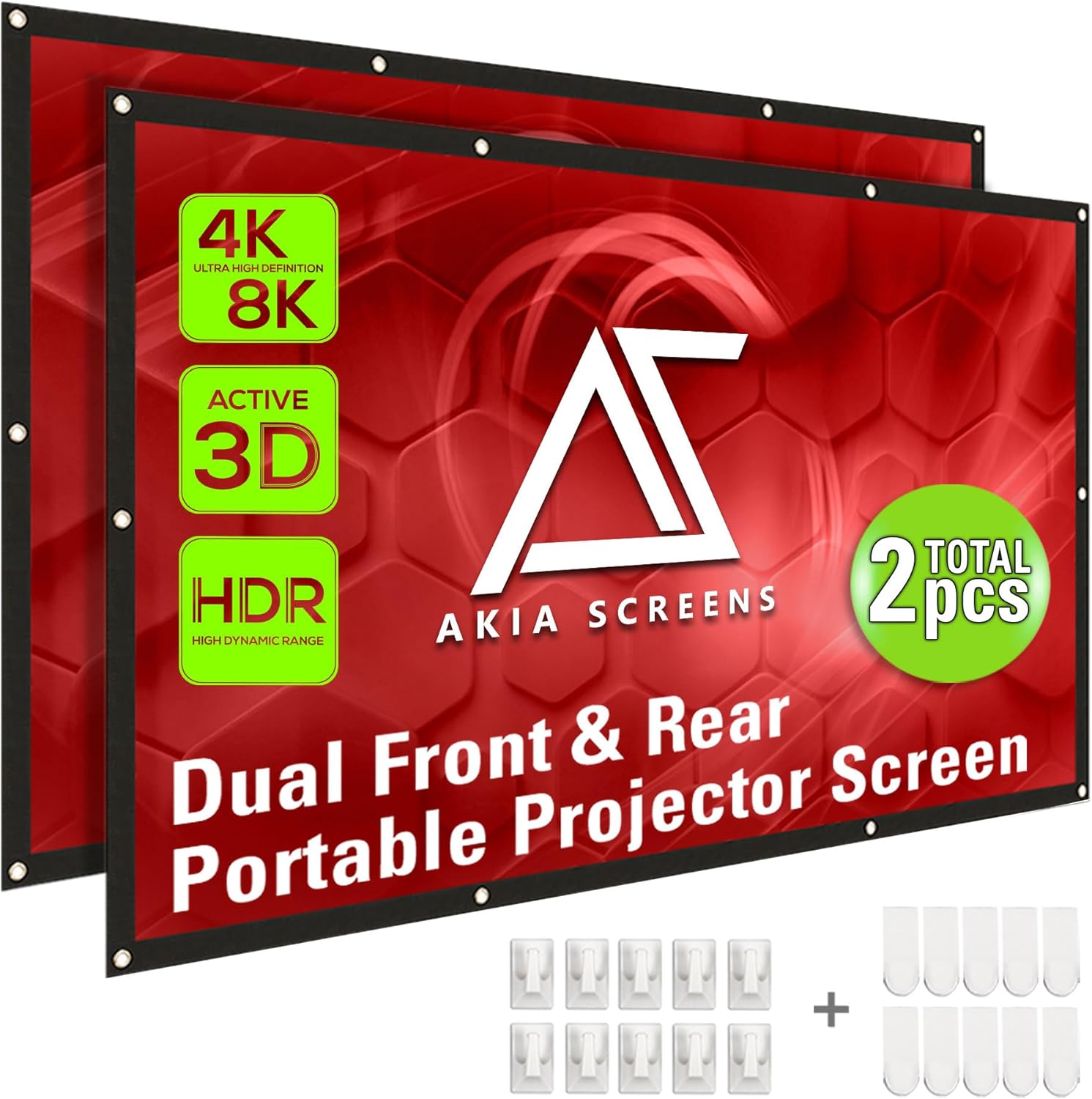 Akia Screens 120-inch Dual |
6.3/10 | Check Price |
| Best for window illusions |
 ReaperBrothers Holographic Screen |
6.0/10 | Check Price |
The Picks in Detail
Elite Screens Yard Master 2 Dual
Why it made the list: The Yard Master 2 Dual combines Elite’s WraithVeil Dual material with a folding aluminum frame that sets up without tools, so it works for backyard movie nights, events, and indoor rooms. The tensioned snap frame keeps the surface flat, which matters more for rear projection than for front.
Key specs: WraithVeil Dual front and rear material; 0.8 gain; 150-degree viewing angle; 105 to 180 inch sizes in 16:9; 120-inch model view area 59.0 x 104.7 inches; aluminum folding frame with snap tensioning; carrying bag, ground stakes, and rigging cord included; 2-year warranty (Elite listing).
Skip it if: You want a permanent indoor install. The CineTension 3 Dual mounts to a wall or ceiling.
Pros
- Works for front or rear projection.
- Tool-free folding frame with a carrying bag.
- Wide range of sizes.
Cons
- 0.8 gain needs a reasonably bright projector.
- Large overall footprint once the legs are out.
- Needs anchoring outdoors in wind.
Elite Screens CineTension 3 Dual
Why it made the list: The CineTension 3 Dual puts the same front and rear material in a tab-tensioned motorized case. It suits media rooms, retail displays, and venues where the projector sits in a back room or behind a wall and the screen should disappear when not in use.
Key specs: WraithVeil Dual front and rear material; 0.8 gain; 150-degree viewing angle; 110 to 150 inch sizes; 120-inch model view area 58.9 x 104.6 inches; tab tensioning; black masking borders; tubular motor; IR and RF remotes; 12V trigger; plug-and-play low-voltage control.
Skip it if: You plan to use a laser projector and cannot confirm compatibility. Elite’s Amazon listing says the screen is not compatible with laser projectors, while its material page lists ultra short, short, and standard throw projectors. Ask Elite before buying.
Pros
- Tab tensioning for a flat surface.
- Retracts out of sight.
- 12V trigger to sync with the projector.
Cons
- Least portable pick here.
- Elite’s sources differ on laser projector compatibility.
- Needs a wall or ceiling installation.
Akia Screens 120-inch Dual
Why it made the list: Akia’s 120-inch dual screen is a frameless sheet with metal grommets and rigging cords. You supply the support, such as a garage door frame, poles, or a homemade PVC frame, which keeps it far simpler and lighter than the Elite models.
Key specs: SilkWhite dual material; 1.1 gain; 160-degree viewing angle; 58.8 x 104.6 inch view area; metal grommets; rigging cords; spot clean with water; 1-year warranty (Akia listing).
Skip it if: You do not want to build or rig a frame. The Yard Master 2 Dual includes one.
Pros
- Higher gain than the Elite picks.
- Light and easy to store.
- Strong value score.
Cons
- No frame or stand included.
- Flatness depends on how well you tension it.
- Akia does not publish rear projection performance separately.
ReaperBrothers Holographic Screen
Why it made the list: Holographic rear screens are made for a different job: projecting animated scenes onto a window or doorway so they seem to float in the room. ReaperBrothers sells a gray mesh screen sized for a window or porch display, with hardware to hang it.
Key specs: Gray holographic mesh material; 5 x 9 ft; grommets and 3M adhesive hooks for hanging; instructions included (Amazon listing). ReaperBrothers does not publish gain or viewing angle.
Skip it if: You want to watch movies or sports. Choose one of the dual screens above.
Pros
- Made for window and porch displays.
- Hanging hardware included.
- Semi-transparent look suits floating effects.
Cons
- Not intended for movie viewing.
- No published gain or viewing angle.
- Specs come from the retail listing only.
Rear Projection Screens Compared
| Screen | Type | Material | Gain | Viewing angle | Support |
|---|---|---|---|---|---|
| Elite Screens Yard Master 2 Dual | Front and rear | WraithVeil Dual | 0.8 | 150 degrees | Folding frame with legs |
| Elite Screens CineTension 3 Dual | Front and rear | WraithVeil Dual | 0.8 | 150 degrees | Motorized wall or ceiling case |
| Akia Screens 120-inch Dual | Front and rear | SilkWhite dual | 1.1 | 160 degrees | None (grommets and cords) |
| ReaperBrothers Holographic Screen | Rear, holographic | Gray mesh | Not stated | Not stated | Grommets and adhesive hooks |
How We Picked
We looked for screens that manufacturers state are designed for rear projection, either as dual front-and-rear screens or as holographic display screens, and left out unbranded listings without published specifications. We compared material, gain, viewing angle, tensioning, and how each screen is supported. Every pick was assessed from manufacturer documentation and retail listings, not our own measurements, and rated with the PJC Score.
How to Choose a Rear Projection Screen
Plan the space behind the screen
The projector needs the same throw distance behind the screen that it would need in front. A short throw projector cuts that space dramatically. Our guide to short throw projectors explains throw ratio.
Flip the image
Seen from the audience side, a rear-projected image is mirrored. Most projectors have a rear or rear-ceiling mode in the setup menu that flips it back. Check your projector’s manual before you buy.
Watch for hotspots
Because the projector shines toward the audience, viewers lined up with the lens may see a brighter spot. Lower-gain dual materials spread light more evenly, which is one reason the Elite screens use 0.8 gain.
Tension matters
Wrinkles and sagging show more clearly on a translucent screen. Framed and tab-tensioned screens stay flatter than loose sheets.
Outdoor setup
Screens act like sails. Stake the frame, use the included rigging, and take the screen down in strong wind. Our outdoor projector setup guide covers placement and power.
FAQ
Can I use any projector for rear projection?
Most projectors can, as long as they offer a rear projection mode to mirror the image. Check the throw distance too, since the projector needs room behind the screen.
Can a regular screen be used for rear projection?
No. Standard front projection screens have an opaque backing that blocks light. You need a screen made for rear or dual projection.
Is rear projection dimmer than front projection?
It can be, depending on the material and gain. Dual materials balance brightness on both sides, so a brighter projector helps, especially outdoors before full dark.
What is a holographic projection screen?
It is a semi-transparent mesh used for seasonal window and doorway displays. It creates a floating effect rather than a solid movie image.
Final Thoughts
The Elite Screens Yard Master 2 Dual is our top rear projection screen for its tensioned folding frame and front or rear flexibility. The CineTension 3 Dual is the motorized option for permanent installs, the Akia Screens 120-inch Dual is the value pick if you can rig your own support, and the ReaperBrothers screen is for holiday window illusions. For standard front projection, see our best projector screen guide.
About the author
Brandon Russell writes projector reviews and buying guides for ProjectorChannel. He compares projectors, screens, and accessories using manufacturer specifications and documentation, and focuses on the trade-offs that matter in a real room.