Best Projector for Classroom: 4 Lamp-Free Picks
Classroom projectors work harder than home projectors. They run for hours a day with the lights on, sit in dusty...
 By Brandon Russell
Updated November 24, 2026
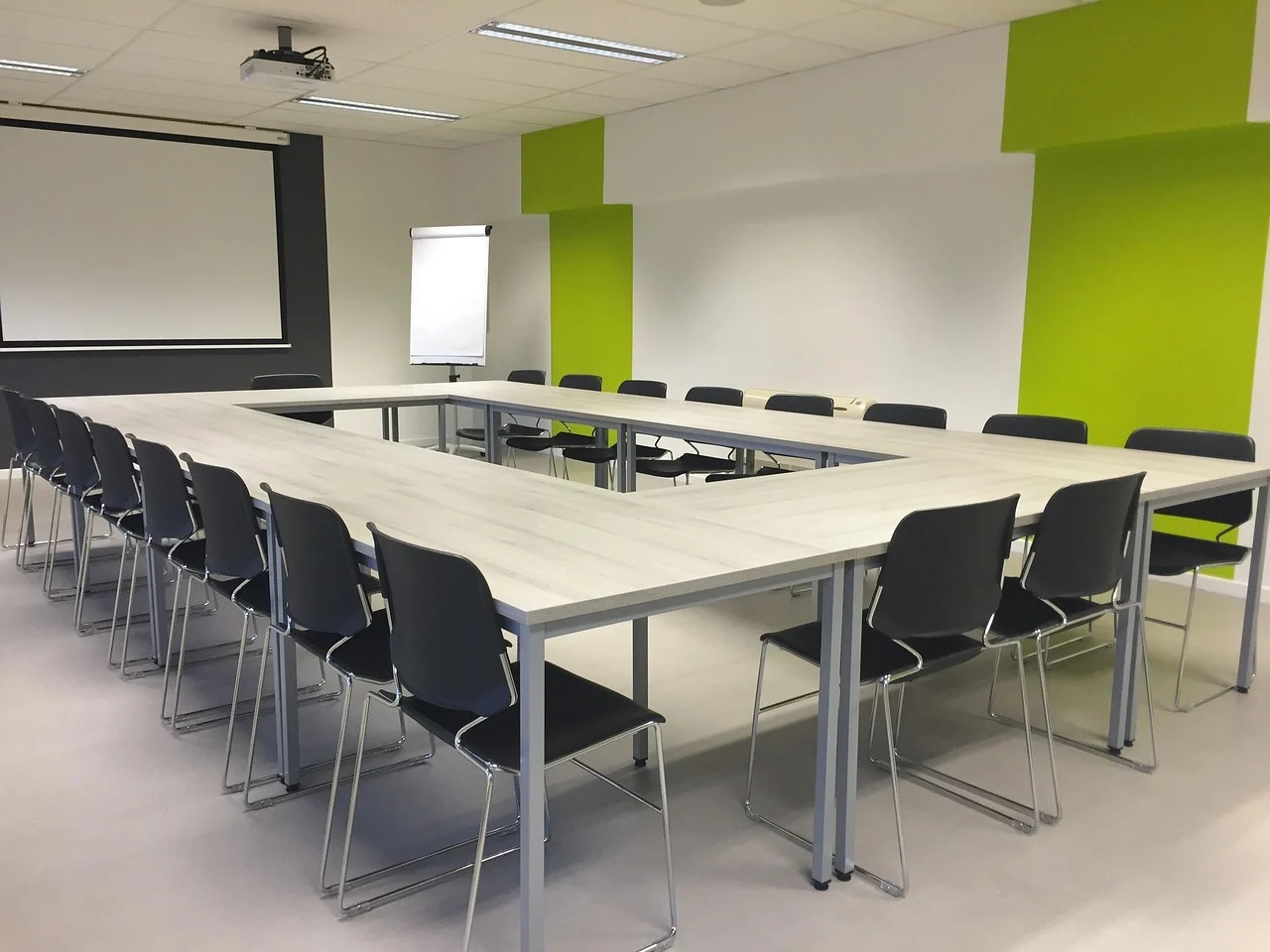
Classroom projectors work harder than home projectors. They run for hours a day with the lights on, sit in dusty rooms, and need to show readable text and diagrams to the back row. That makes brightness, light source life, and dust resistance more important than cinema features.
We compared classroom projectors from established brands using manufacturer specifications and rated each one with the same five weighted criteria. All four picks use lamp-free laser or LED light sources, which cut down on maintenance.
Safety note: mount projectors on hardware rated for their weight, keep cables out of walkways, and teach students not to look into the lens, especially with short throw projectors mounted near the board.
Our Top Picks
| Best for | Product | PJC Score About PJC ScorePJC Score (out of 10) is our editorial rating from five weighted criteria, based on manufacturer specifications. See how we score. | |
|---|---|---|---|
| Best overall |
 Epson PowerLite L210W |
7.5/10 | Check Price |
| Best long-life LED |
 ViewSonic LS610WH |
7.3/10 | Check Price |
| Best short throw laser |
 Optoma ZW350ST |
6.3/10 | Check Price |
| Best short throw LED |
 ViewSonic LS560WH |
6.0/10 | Check Price |
The Picks in Detail
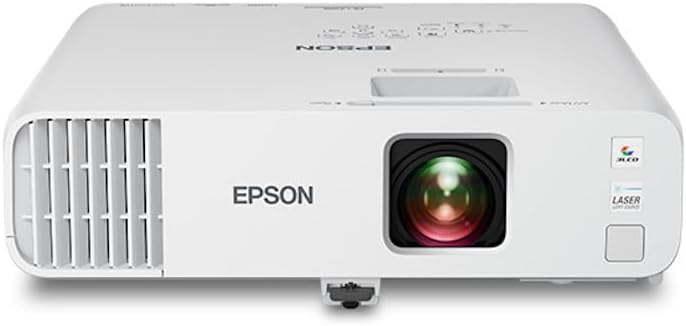
Epson PowerLite L210W
Why it made the list: The L210W is a lamp-free 3LCD laser projector built for classrooms, with a high brightness rating, a 1.62x zoom for flexible mounting, and built-in wireless for sharing from teacher and student devices.
Key specs: 4,500 lumens in normal mode and 3,100 in ECO (ISO 21118, Epson rating); WXGA (1280 x 800); 3LCD; laser rated for 20,000 hours; 1.0 to 1.62 zoom; built-in wireless.
Skip it if: The projector must mount above the board. A short throw model like the Optoma ZW350ST avoids shadows.
Pros
- High brightness rating for lit classrooms.
- Laser light source with no lamp changes.
- Zoom and wireless simplify installation and sharing.
Cons
- WXGA resolution, not Full HD.
- Epson’s laser life rating assumes specific air quality conditions.
- Throw ratio not listed in the materials we found.
ViewSonic LS610WH
Why it made the list: The LS610WH has the longest rated light source life here, a sealed engine to keep dust out, and wide horizontal and vertical keystone for awkward mounting positions.
Key specs: 4,000 ANSI lumens (ViewSonic rating); WXGA LED; LED rated for 60,000 hours in normal mode; 1.37 to 1.64 throw ratio with 1.2x optical zoom; IP5X sealed engine; H/V keystone of ±40 degrees; LAN control.
Skip it if: You want wireless sharing built in. The Epson L210W includes it.
Pros
- Longest rated light source life in this guide.
- Dust-sealed optical engine.
- LAN control for IT management.
Cons
- WXGA resolution.
- Standard throw, so it needs space in front of the board.
- No built-in wireless listed.
Optoma ZW350ST
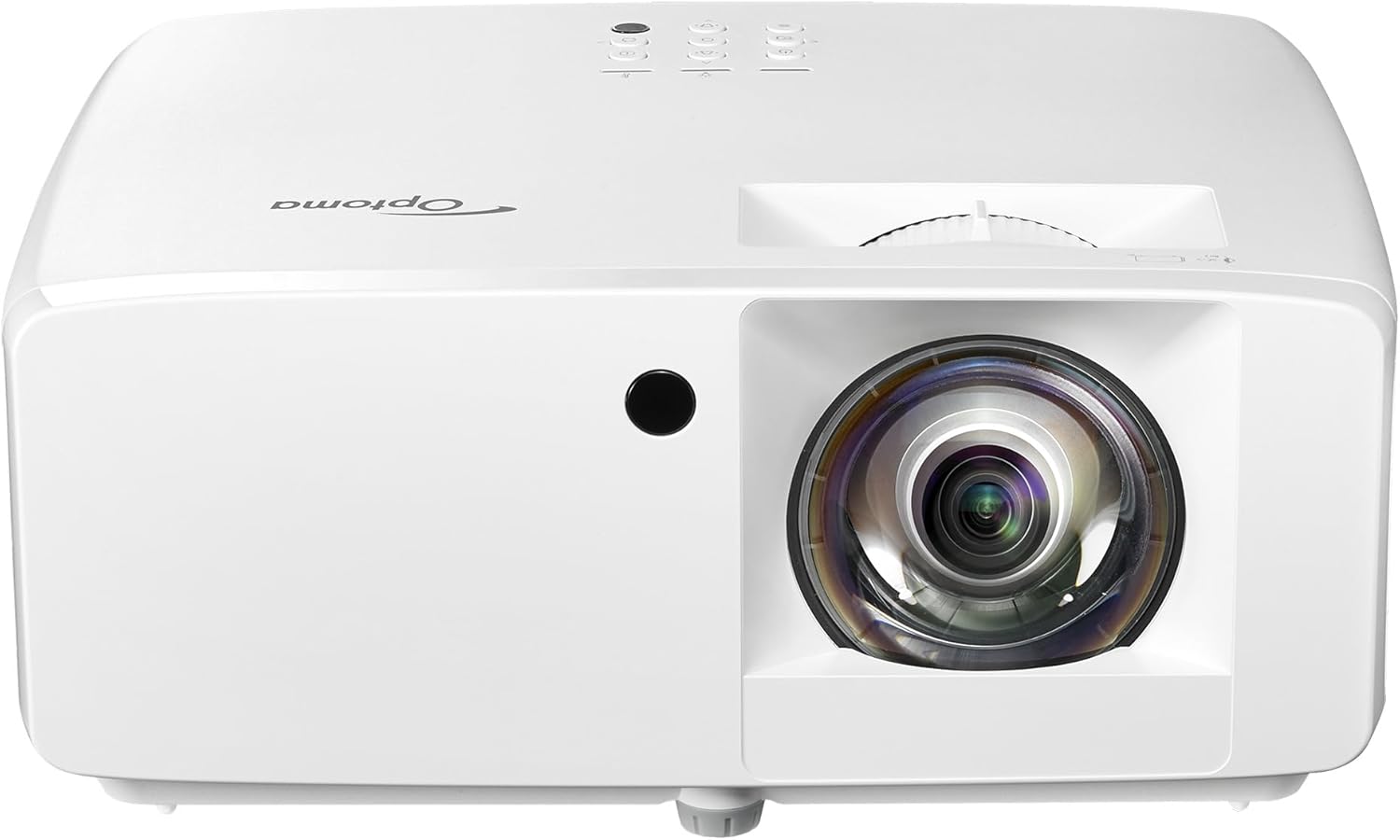
Why it made the list: The ZW350ST is a short throw laser projector with a 0.52 throw ratio, so it can mount close to the board and keep the teacher out of the beam. Optoma markets it as IP6X dust resistant with a long-life laser.
Key specs: 0.52 throw ratio (Optoma projection calculator); WXGA; 3,600 lumens, IP6X dust resistance, and 30,000-hour DuraCore laser (Optoma listing).
Skip it if: You need a fully documented spec sheet for purchasing. The Epson L210W is better documented.
Pros
- Short throw reduces shadows on the board.
- Dust-resistant design for classrooms.
- Long rated laser life.
Cons
- We could not find a full Optoma spec sheet; brightness and IP rating come from the listing.
- WXGA resolution.
- Fixed short throw lens limits image size changes.
ViewSonic LS560WH
Why it made the list: The LS560WH is a short throw LED projector with a 0.49 throw ratio and a sealed engine. ViewSonic says it projects an 87-inch image from 0.92 m (about 3 feet), which suits small classrooms.
Key specs: 0.49 throw ratio with a fixed lens; 87 inches from 0.92 m (ViewSonic figure); WXGA; LED rated for 30,000 hours; IP5X sealed engine; H/V keystone.
Skip it if: Your classroom is large or bright. The Epson L210W or ViewSonic LS610WH are rated brighter.
Pros
- Very short throw for small rooms.
- Long-life LED with a sealed engine.
- Keystone for flexible placement.
Cons
- ViewSonic’s US page lists two different ANSI brightness figures.
- Likely dimmer than the other picks.
- WXGA resolution.
Classroom Projectors Compared
| Projector | Rated brightness | Resolution | Light source life | Throw | Dust protection |
|---|---|---|---|---|---|
| Epson PowerLite L210W | 4,500 lumens (ISO) | WXGA | 20,000 hr (laser) | Standard, 1.62x zoom | Not stated |
| ViewSonic LS610WH | 4,000 ANSI lumens | WXGA | 60,000 hr (LED) | 1.37 to 1.64 | IP5X engine |
| Optoma ZW350ST | 3,600 lumens (listing) | WXGA | 30,000 hr (listing) | Short, 0.52 | IP6X (listing) |
| ViewSonic LS560WH | Sources differ | WXGA | 30,000 hr (LED) | Short, 0.49 | IP5X engine |
How We Picked
We focused on lamp-free projectors from established brands sold for education, comparing brightness standards, light source life, dust protection, and throw ratio. We flagged figures that come only from retail listings or that conflict across a maker’s pages. Every pick was assessed from manufacturer documentation, not our own measurements, and rated with the PJC Score.
How to Choose a Classroom Projector
Brightness for lights-on teaching
Classrooms rarely go dark. Aim for a rating in the high thousands of ANSI or ISO lumens for a typical room with windows.
Lamp-free saves time
Laser and LED light sources avoid lamp replacements and warm-up delays, which reduces work for teachers and IT staff.
Short throw for the front of the room
Short throw projectors mounted near the board reduce shadows and glare in the teacher’s eyes. See our short throw guides for how throw ratio works.
Resolution and text
WXGA is common in classrooms and fine for slides. For detailed documents or video, WUXGA or Full HD models are sharper; see our conference room projector guide for higher-resolution options.
FAQ
How many lumens does a classroom projector need?
For a typical classroom with some light, look for several thousand ANSI or ISO lumens. Larger or brighter rooms need more.
Is WXGA good enough for teaching?
Yes, for slides and video in most classrooms. Higher resolution helps with small text and spreadsheets.
Laser or LED for schools?
Both avoid lamp changes. LED models in this guide list longer rated lives, while laser models are often brighter.
Final Thoughts
The Epson PowerLite L210W is our top classroom projector for its brightness, zoom, and built-in wireless. The ViewSonic LS610WH offers the longest rated life, and the Optoma ZW350ST and ViewSonic LS560WH are short throw options for mounting near the board.
About the author
Brandon Russell writes projector reviews and buying guides for ProjectorChannel. He compares projectors, screens, and accessories using manufacturer specifications and documentation, and focuses on the trade-offs that matter in a real room.