Best Projectors for Churches: 4 Bright Laser Picks
Church sanctuaries are hard rooms for projectors. They are large, often have tall windows and stage lighting, and the screen...
 By Brandon Russell
Updated November 24, 2026

Church sanctuaries are hard rooms for projectors. They are large, often have tall windows and stage lighting, and the screen may need to be read from the back row during lyrics, scripture, and announcements. That calls for high brightness, sharp text, and installation flexibility for mounting positions that are rarely ideal.
We compared large-venue projectors from established brands using manufacturer specifications and rated each one with the same five weighted criteria. All four picks are laser installation projectors rated at 5,500 lumens or more.
Safety note: large-venue projectors are heavy and often mounted high. Use mounts rated for the projector’s weight and have installation done by qualified installers working to local codes. Never look directly into the lens.
Our Top Picks
| Best for | Product | PJC Score About PJC ScorePJC Score (out of 10) is our editorial rating from five weighted criteria, based on manufacturer specifications. See how we score. | |
|---|---|---|---|
| Best overall |
 BenQ LU935 |
7.8/10 | Check Price |
| Best for video and 4K |
 ViewSonic LS901-4K |
7.8/10 | Check Price |
| Best short throw for stages |
 Epson PowerLite L630SU |
7.2/10 | Check Price |
| Brightest short throw |
 ViewSonic LS921WU |
7.1/10 | Check Price |
The Picks in Detail
BenQ LU935
Why it made the list: The LU935 pairs a 6,000 ANSI lumen rating with WUXGA resolution, wide lens shift, and a 1.6x zoom. That flexibility helps when the projector must sit off-center in a balcony or on a side wall.
Key specs: 6,000 ANSI lumens (BenQ rating); WUXGA; laser rated for 20,000 hours; lens shift of ±60% vertical and ±23% horizontal; 1.6x zoom with a 1.36 to 2.18 throw ratio; 2D keystone; image up to 300 inches.
Skip it if: Your services rely on high-resolution video. The ViewSonic LS901-4K offers 4K.
Pros
- High brightness rating with WUXGA text clarity.
- Wide lens shift and zoom for difficult mounting positions.
- Laser light source with low maintenance.
Cons
- Not 4K, which matters for some video-heavy services.
- Heavy at 7.0 kg.
- Premium price tier.
ViewSonic LS901-4K
Why it made the list: The LS901-4K combines 4K resolution, a 5,500 ANSI lumen rating, and a 1.7x zoom, making it a strong fit for churches that show worship videos, livestream inserts, and film nights alongside lyrics.
Key specs: 5,500 ANSI lumens (ViewSonic rating); 4K; laser light source rated for 30,000 hours in eco mode; 1.2 to 2.04 throw ratio with 1.7x optical zoom; 30 to 300 inch image; 4.2 ms input lag (ViewSonic global rating).
Skip it if: The projector must sit close to the screen. The Epson L630SU or ViewSonic LS921WU are short throw.
Pros
- 4K resolution for video content.
- Wide zoom range for varied throw distances.
- Long rated laser life in eco mode.
Cons
- ViewSonic’s regional pages describe the light source differently.
- Slightly lower brightness rating than the 6,000 lumen picks.
- Lens shift is not listed in the materials we found.
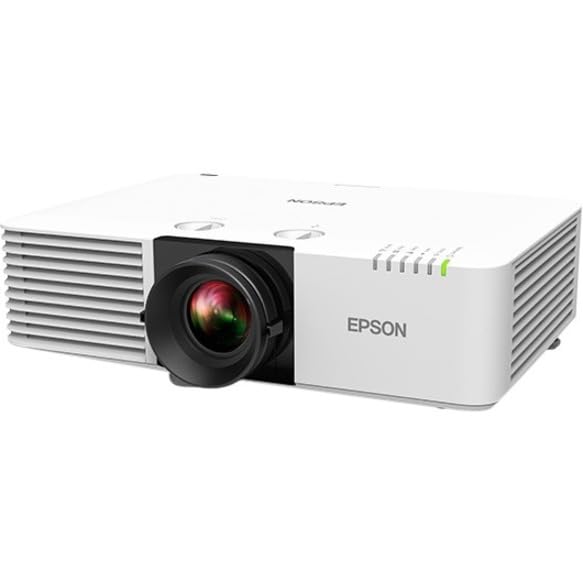
Epson PowerLite L630SU
Why it made the list: The L630SU is a short throw 3LCD laser projector that Epson says can fill up to 200 inches from less than 12 feet away. Lens shift and built-in wireless with Miracast add installation and sharing flexibility.
Key specs: 6,000 lumens in normal mode and 4,200 in quiet or extended mode (ISO 21118, Epson rating); WUXGA with 4K input; 3LCD; short throw fixed lens; up to 200 inches from under 12 feet; laser rated for 20,000 hours; horizontal and vertical lens shift; wireless with Miracast.
Skip it if: You need to mount far from the screen. The BenQ LU935 or ViewSonic LS901-4K have longer zoom ranges.
Pros
- Large image from a short distance.
- 3LCD with matched color and white brightness.
- Lens shift and wireless built in.
Cons
- Fixed lens with no zoom.
- Epson’s documents give different usable throw ranges; confirm for your room.
- Laser life rating assumes specific air quality conditions.
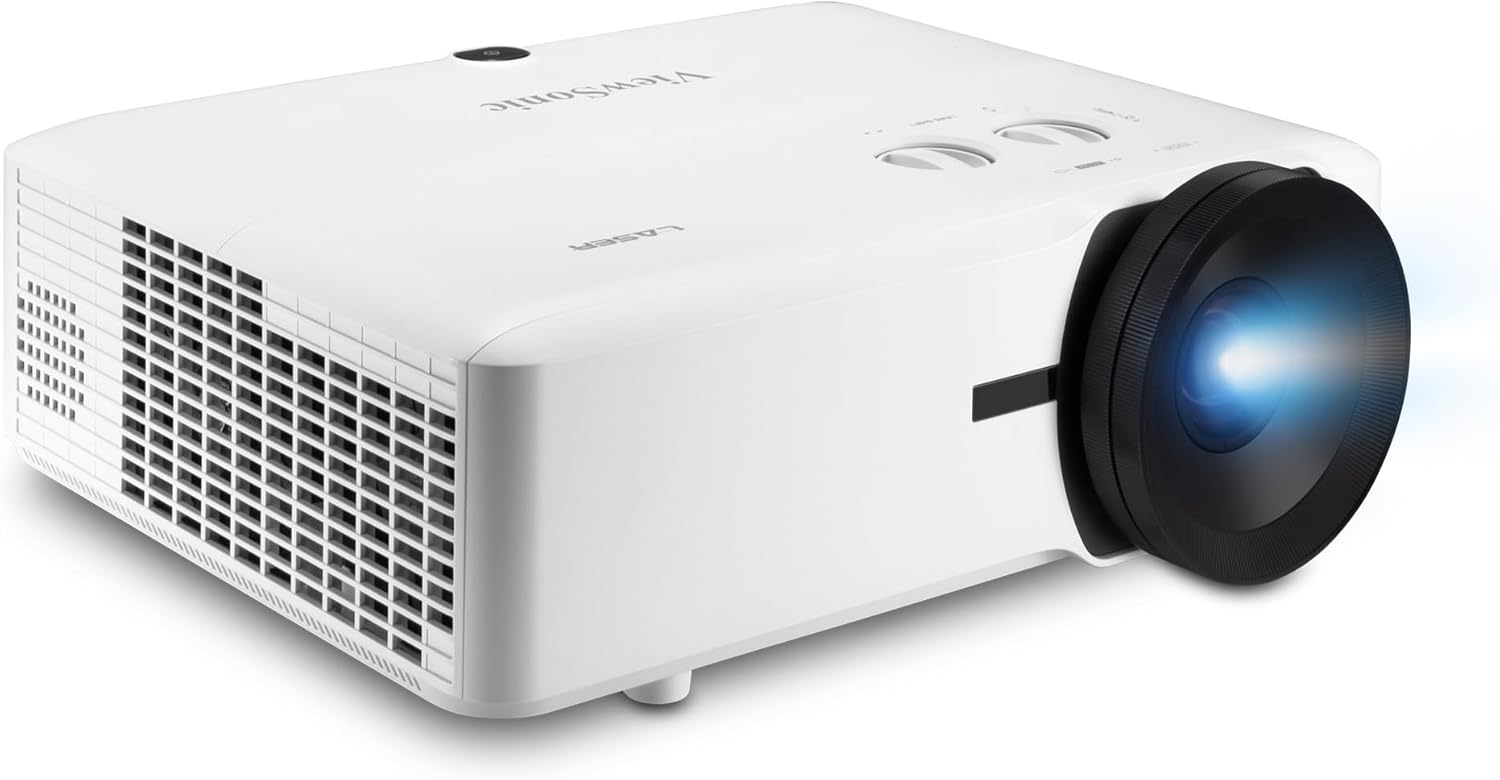
ViewSonic LS921WU
Why it made the list: The LS921WU is a 6,000 ANSI lumen short throw laser projector with WUXGA resolution and a small zoom range. It is an alternative to the Epson L630SU for front-of-room installations.
Key specs: 6,000 ANSI lumens (ViewSonic rating); WUXGA; laser light source; 0.81 to 0.89 throw ratio with 1.1x zoom.
Skip it if: You want wireless sharing built in. The Epson L630SU includes it.
Pros
- High ANSI brightness rating in a short throw design.
- WUXGA resolution.
- Small zoom range helps fine-tune image size.
Cons
- ViewSonic’s pages list different input lag and image size ranges.
- Fewer features listed than the Epson L630SU.
- Not 4K.
Church Projectors Compared
| Projector | Rated brightness | Resolution | Throw ratio | Zoom | Laser life |
|---|---|---|---|---|---|
| BenQ LU935 | 6,000 ANSI lumens | WUXGA | 1.36 to 2.18 | 1.6x | 20,000 hr |
| ViewSonic LS901-4K | 5,500 ANSI lumens | 4K | 1.2 to 2.04 | 1.7x | 30,000 hr (eco) |
| Epson PowerLite L630SU | 6,000 lumens (ISO) | WUXGA | Short throw, fixed | None | 20,000 hr |
| ViewSonic LS921WU | 6,000 ANSI lumens | WUXGA | 0.81 to 0.89 | 1.1x | Not stated |
How We Picked
We compared laser installation projectors from established brands rated for large rooms, focusing on brightness standards, resolution for readable lyrics and scripture, throw options, and lens flexibility. Every pick was assessed from manufacturer documentation, not our own measurements, and rated with the PJC Score.
How to Choose a Church Projector
Plan around your brightest service
Morning services with sunlight through windows need far more brightness than evening events. Size the projector for the brightest conditions you will use it in.
Text readability from the back row
WUXGA or 4K resolution and a large enough image keep lyrics and scripture legible. Use high-contrast slide designs as well.
Throw distance and mounting
Long-throw projectors mount at the back or in a balcony; short throw models mount near the stage. Measure distances and check each maker’s throw calculator before buying.
Plan for professional installation
High mounts, long cable runs, and heavy projectors usually call for an AV installer.
FAQ
How many lumens does a church projector need?
Large sanctuaries with daylight typically need 5,000 lumens or more. Smaller, darker rooms can use less.
Is 4K necessary for worship services?
Not for lyrics and slides, where WUXGA is sharp. 4K helps for video-heavy services and large screens.
Laser or lamp for churches?
Laser projectors avoid lamp changes on high mounts, which saves time and lift rentals.
Final Thoughts
The BenQ LU935 is our top church projector for its brightness rating and lens flexibility. The ViewSonic LS901-4K is the pick for video and 4K, and the Epson L630SU and ViewSonic LS921WU are bright short throw options for mounting near the stage.
About the author
Brandon Russell writes projector reviews and buying guides for ProjectorChannel. He compares projectors, screens, and accessories using manufacturer specifications and documentation, and focuses on the trade-offs that matter in a real room.