Best Short Throw Projector: 4 Picks for Tight Rooms
A short throw projector creates a big image from just a few feet away. That solves the most common problem...
 By Brandon Russell
Updated November 24, 2026

A short throw projector creates a big image from just a few feet away. That solves the most common problem in apartments, bedrooms, and game rooms: there is no room to put a projector behind the couch, and no one wants to walk through the beam or cast shadows on the screen.
We compared short throw projectors from established brands using manufacturer specifications, with attention to throw ratio, brightness standards, and input lag by mode. Each pick is rated with the same five weighted criteria. If you want the projector to sit right against the wall, see our ultra short throw guides instead.
Safety note: short throw projectors sit close to the screen and seating, so keep the beam out of walkways and do not look into the lens. Use a mount rated for the projector’s weight if you install it on a ceiling.
Our Top Picks
| Best for | Product | PJC Score About PJC ScorePJC Score (out of 10) is our editorial rating from five weighted criteria, based on manufacturer specifications. See how we score. | |
|---|---|---|---|
| Best overall |
 BenQ TK710STi |
8.0/10 | Check Price |
| Best for gaming on a budget |
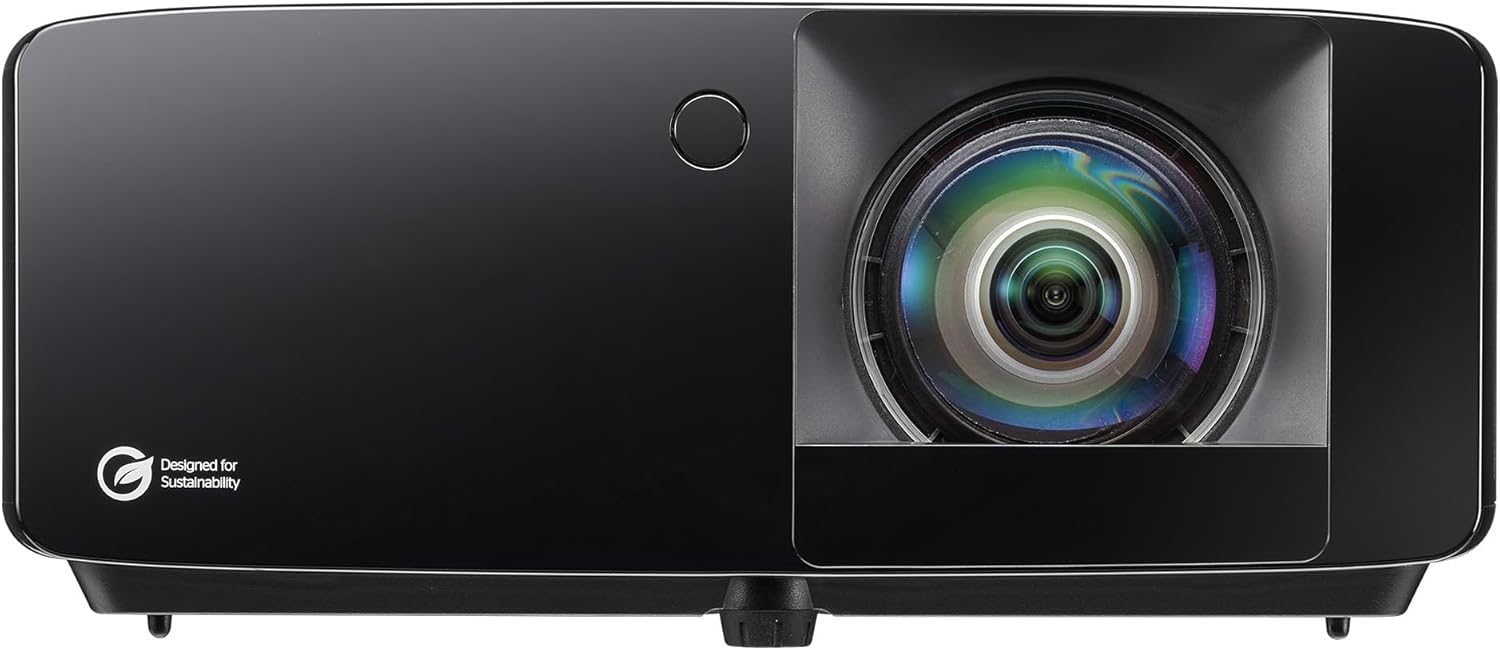 Optoma GT2400HDR |
6.5/10 | Check Price |
| Brightest laser pick |
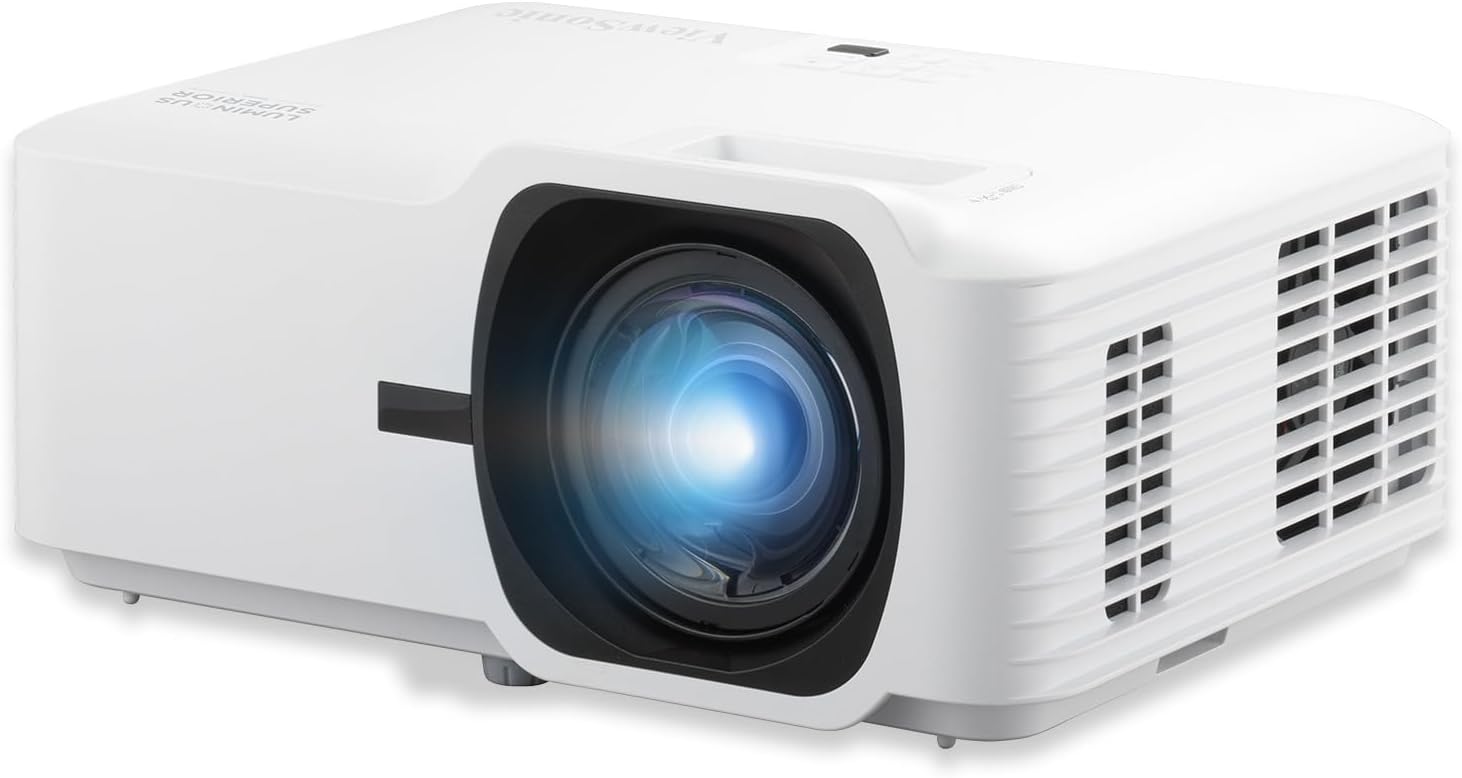 ViewSonic LS711HD |
6.4/10 | Check Price |
| Best lamp-based value |
 BenQ TH671ST |
6.2/10 | Check Price |
The Picks in Detail
BenQ TK710STi
Why it made the list: The TK710STi is the only 4K pick here, with a laser light source, a 1.2x zoom on a short throw lens, Android TV, and low published input lag. It works as a living room movie projector and a gaming projector in one.
Key specs: 3,200 ANSI lumens (BenQ rating); 3840 x 2160; laser rated for 20,000 hours; 0.69 to 0.83 throw ratio with 1.2x zoom; input lag of 4 ms at 1080p 240 Hz, 8 ms at 120 Hz, and 16 ms at 4K 60 Hz (BenQ rating); HDR10 and HLG; Android TV.
Skip it if: You only need 1080p for movies on a budget. The BenQ TH671ST costs far less.
Pros
- 4K laser picture from a short throw lens.
- Zoom for fine-tuning image size.
- Streaming built in.
Cons
- Lowest input lag applies only at 1080p 240 Hz.
- Highest price tier in this guide.
- BenQ’s regional pages list different throw distance examples.
Optoma GT2400HDR
Why it made the list: The GT2400HDR has one of the shortest throw ratios among standard short throw projectors and low published input lag at 1080p 120 Hz. It accepts 4K input for consoles and has a high brightness rating.
Key specs: 4,200 lumens (Optoma rating); 1080p; 0.496:1 throw ratio with a fixed lens; input lag of 8.4 ms at 1080p 120 Hz and 16.7 ms at 4K 60 Hz input (Optoma rating); two HDMI 2.0 ports.
Skip it if: You want 4K output. The BenQ TK710STi is the 4K option.
Pros
- Very short throw ratio.
- Low input lag at 120 Hz.
- High brightness rating.
Cons
- 1080p display, even with 4K input.
- Fixed lens with no zoom.
- Light source not named in the Optoma datasheet excerpt we found.
ViewSonic LS711HD
Why it made the list: The LS711HD shares the top ANSI brightness rating here with a laser light source and horizontal and vertical keystone. ViewSonic says it projects a 100-inch image from about 3.6 feet.
Key specs: 4,200 ANSI lumens (ViewSonic rating); 1920 x 1080; 0.496 throw ratio; laser rated for 20,000 hours in Normal mode and 30,000 in SuperEco; keystone of ±15 degrees vertical and horizontal.
Skip it if: You want streaming apps built in. The BenQ TK710STi includes Android TV.
Pros
- High ANSI brightness rating for lit rooms.
- Laser light source with long rated life.
- Two-way keystone for off-center placement.
Cons
- Designed for installation and business use, with few home features.
- No published input lag.
- No built-in streaming.
BenQ TH671ST
Why it made the list: The TH671ST is a long-running 1080p short throw projector with a 3,000 ANSI lumen rating and published input lag. It is the lowest-cost way into short throw projection among the picks we compared.
Key specs: 3,000 ANSI lumens (BenQ rating); 1080p; 0.69 to 0.83 throw ratio; input lag of 16.7 ms at 1080p 60 Hz (BenQ rating); lamp rated for 4,000 hours in Normal mode, 10,000 in ECO and SmartEco, and 15,000 in LampSave.
Skip it if: You want a laser light source. The ViewSonic LS711HD or BenQ TK710STi use lasers.
Pros
- Lowest price tier in this guide.
- Published input lag for console gaming.
- Long lamp life in LampSave mode.
Cons
- Lamp-based, so plan for replacements.
- BenQ’s pages list different zoom ratios.
- Older design without streaming or HDR.
Short Throw Projectors Compared
| Projector | Resolution | Rated brightness | Throw ratio | Light source | Stated input lag |
|---|---|---|---|---|---|
| BenQ TK710STi | 4K (3840 x 2160) | 3,200 ANSI lumens | 0.69 to 0.83 | Laser | 16 ms (4K 60 Hz) |
| Optoma GT2400HDR | 1080p | 4,200 lumens | 0.496 | Not stated | 16.7 ms (4K 60 Hz input) |
| ViewSonic LS711HD | 1080p | 4,200 ANSI lumens | 0.496 | Laser | Not stated |
| BenQ TH671ST | 1080p | 3,000 ANSI lumens | 0.69 to 0.83 | Lamp | 16.7 ms (1080p 60 Hz) |
How We Picked
We compared short throw projectors from established brands with published throw ratios and brightness standards. We left out models whose specifications we could not match to a manufacturer source, and out-of-stock models. Every pick was assessed from manufacturer documentation, not our own measurements, and rated with the PJC Score.
How to Choose a Short Throw Projector
Understand throw ratio
Throw ratio is the distance from the lens to the screen divided by the image width. A 0.5 ratio means a 100-inch-wide image needs about 50 inches of distance. Short throw models typically fall between about 0.4 and 1.0; ultra short throw models are lower still.
Short throw or ultra short throw
Short throw projectors sit a few feet away on a table or ceiling mount. Ultra short throw projectors sit inches from the wall on a cabinet and usually cost more.
Watch the screen surface
Steeper projection angles make wall texture more visible. A smooth wall or a proper screen helps; see our projector screen guides.
Check gaming specs if you play
Short throw projectors are popular for gaming because players do not cast shadows. Look for input lag figures that name the resolution and refresh rate.
FAQ
How close can a short throw projector be to the wall?
It depends on throw ratio and image size. The 0.496 models here produce about a 100-inch diagonal image from roughly 3.5 to 4 feet, per their makers’ figures.
Are short throw projectors good for golf simulators?
Yes. Several picks here are also popular for simulators. See our golf simulator projector guide.
Do short throw projectors cost more?
Short throw lenses can add cost, but the BenQ TH671ST shows that 1080p short throw models are available at lower price tiers.
Final Thoughts
The BenQ TK710STi is our top short throw pick for 4K, laser, and gaming performance. The Optoma GT2400HDR suits budget gaming, the ViewSonic LS711HD is the bright laser option for installation, and the BenQ TH671ST is the value pick.
About the author
Brandon Russell writes projector reviews and buying guides for ProjectorChannel. He compares projectors, screens, and accessories using manufacturer specifications and documentation, and focuses on the trade-offs that matter in a real room.