Best Budget Projectors: 5 Picks With Honest Brightness Ratings
A budget projector can still fill a wall with a sharp picture, but the cheapest models cut corners in ways...
 By Brandon Russell
Updated November 24, 2026
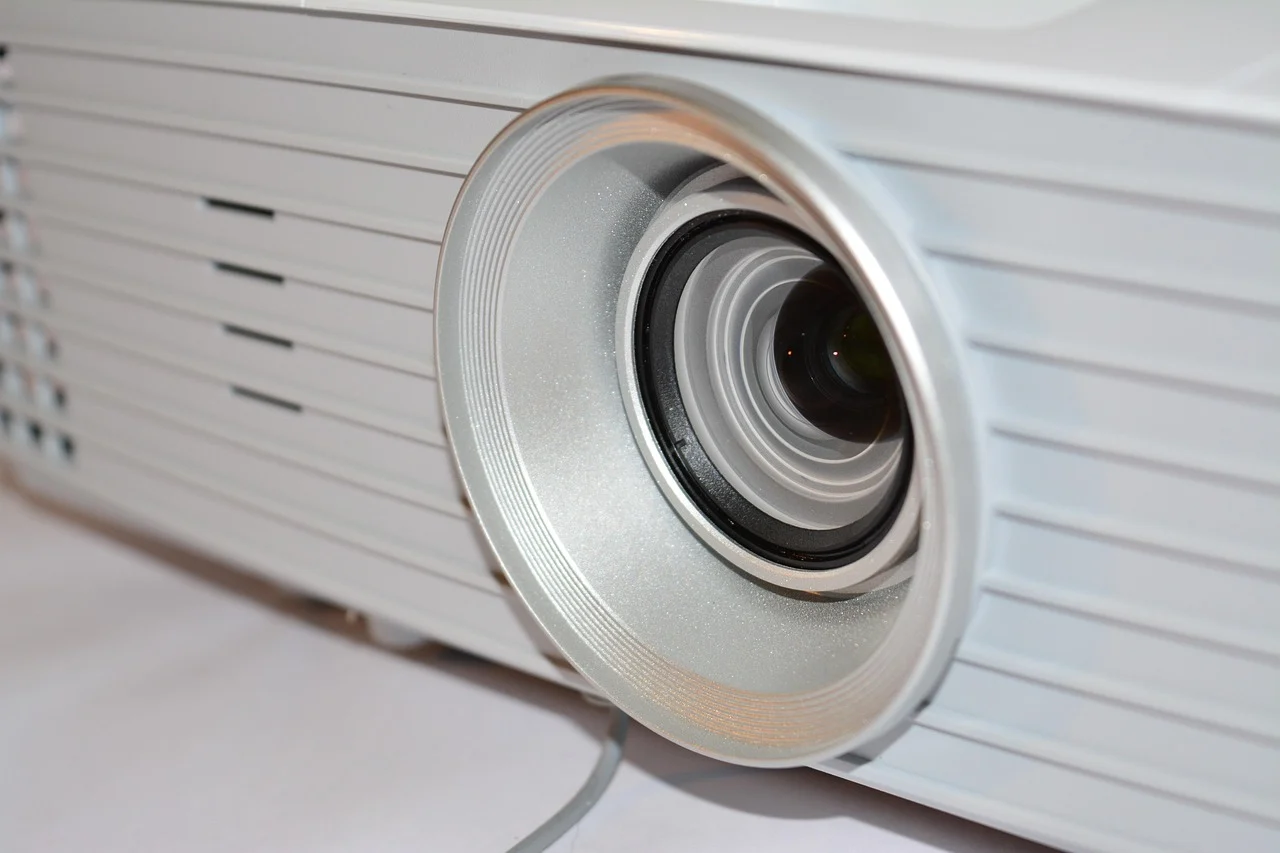
A budget projector can still fill a wall with a sharp picture, but the cheapest models cut corners in ways that are easy to miss on a product page: inflated brightness claims, low native resolution, and weak placement tools. The good news is that a handful of established brands sell real 1080p projectors with clearly rated brightness at the lower end of the market.
We compared budget-friendly projectors using the specifications and manuals their manufacturers publish, and rated each one with the same five weighted criteria. The five picks below favor clear ratings and honest trade-offs over the biggest number on the box.
Safety note: never look directly into a projector lens while it is on. Lamp-based projectors run hot, so let the lamp cool fully before replacing it, and follow the manufacturer’s instructions.
Our Top Picks
| Best for | Product | PJC Score About PJC ScorePJC Score (out of 10) is our editorial rating from five weighted criteria, based on manufacturer specifications. See how we score. | |
|---|---|---|---|
| Best overall |
 BenQ TH575i |
6.6/10 | Check Price |
| Best 3LCD picture |
 Epson Home Cinema 980 |
6.5/10 | Check Price |
| Best with streaming built in |
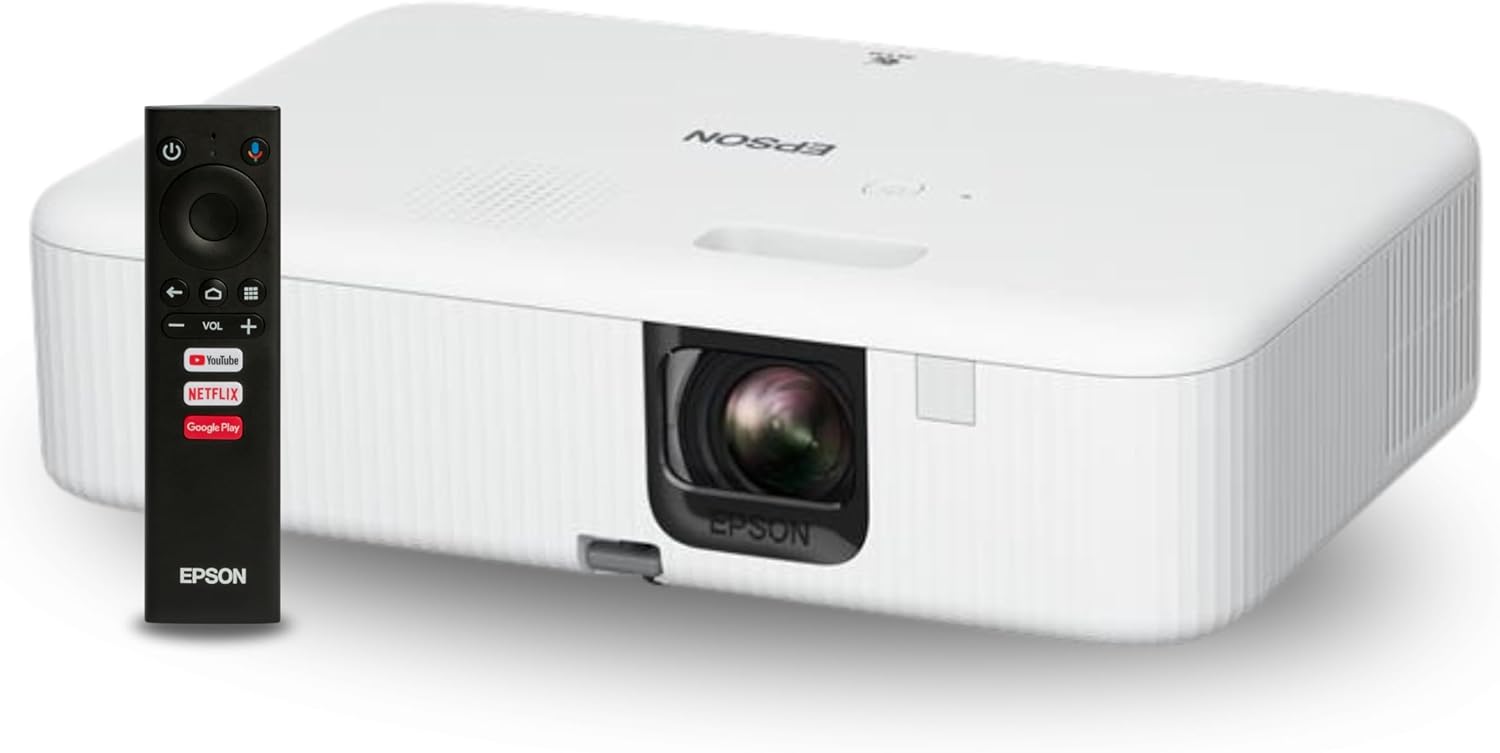 Epson EpiqVision Flex CO-FH02 |
6.6/10 | Check Price |
| Best for gaming and 3D |
 Optoma HD146X |
6.3/10 | Check Price |
| Best portable pick |
 XGIMI MoGo 4 |
6.3/10 | Check Price |
The Picks in Detail
BenQ TH575i
Why it made the list: The TH575i combines a native 1080p picture, the highest brightness rating in this group, and a Google TV dongle in the box, so it is ready to stream without another purchase. BenQ also publishes a low input lag figure, which makes it a sensible all-rounder for movies, sports, and casual gaming.
Key specs: 3,800 ANSI lumens (BenQ rating); native 1920 x 1080; lamp light source; 1.1x zoom with a 1.49 to 1.64 throw ratio; auto vertical keystone; input lag of 16.7 ms at 1080p 60 Hz (BenQ rating); 10 W speaker; Google TV dongle included.
Skip it if: You want to carry the projector outside without a power outlet. The XGIMI MoGo 4 has a built-in battery.
Pros
- Brightness rating high enough for rooms with some ambient light.
- Streaming included through the bundled Google TV dongle.
- Low stated input lag for 1080p gaming.
Cons
- Lamp-based, and BenQ covers replacement lamps for 90 days or 500 hours in the US.
- Only a 1.1x zoom, so plan the projector’s distance from the screen carefully.
- No 4K or HDR processing listed.
Epson Home Cinema 980
Why it made the list: The Home Cinema 980 is a straightforward 1080p projector with Epson’s 3-chip 3LCD engine and an equal color and white brightness rating. That design avoids the rainbow effect some viewers notice on single-chip DLP projectors, according to Epson, and the brightness rating is among the highest here.
Key specs: 4,000 lumens color brightness (IDMS) and white brightness (ISO); 1080p 3LCD; two HDMI inputs; USB power for a streaming stick; built-in speaker; image size up to 300 inches.
Skip it if: You want everything in one box. The Epson EpiqVision Flex CO-FH02 includes an Android TV streaming stick.
Pros
- Highest color brightness rating in this guide.
- 3LCD design with matching color and white brightness.
- USB port can power a streaming stick, so cables stay tidy.
Cons
- No built-in streaming platform: you will need a separate stick or box.
- Epson’s listing does not give a lamp life rating or throw ratio, so check the manual before planning placement.
- Fewer gaming features listed than the BenQ or Optoma.
Epson EpiqVision Flex CO-FH02
Why it made the list: The CO-FH02 is a compact 3LCD projector that ships with an Android TV streaming stick, Wi-Fi, Bluetooth, and a built-in speaker. It is easy to move between rooms and simple to set up for someone who wants to plug in and start watching.
Key specs: 3,000 lumens color brightness (IDMS) and white brightness (ISO 21118); 1080p 3LCD; Android TV streaming stick included; 5 W speaker; Wi-Fi and Bluetooth; image size of 26 to 391 inches (Epson specification); UHE lamp rated for about 6,000 hours in high power mode and 12,000 hours in ECO mode.
Skip it if: Gaming is a priority. The Optoma HD146X and BenQ TH575i publish lower input lag figures.
Pros
- Streaming stick included, so apps are ready out of the box.
- Long rated lamp life for a lamp-based projector.
- Compact enough to move between rooms.
Cons
- Lower brightness rating than the Home Cinema 980 or BenQ TH575i.
- A 5 W speaker is fine for a small room but thin for movie nights.
- Epson’s own pages describe the streaming platform inconsistently, so confirm which interface you are getting.
Optoma HD146X
Why it made the list: The HD146X is a simple native 1080p projector with an Enhanced Gaming Mode, full 3D support, and a long rated lamp life in its Dynamic mode. If you still have a collection of 3D Blu-ray discs, it is one of the few budget models that lists 3D playback.
Key specs: 3,600 ANSI lumens (Optoma rating); native 1080p on a 0.47-inch DLP chip; 16 ms input lag in Enhanced Gaming Mode (Optoma rating); full 3D with DLP Link glasses; lamp rated for up to 15,000 hours in Dynamic mode, 10,000 in Eco, and 4,000 in Bright; 1.1x manual zoom; 28 to 301 inch image.
Skip it if: You want streaming and Wi-Fi built in. The CO-FH02 or BenQ TH575i are simpler to set up for apps.
Pros
- Low stated input lag in Enhanced Gaming Mode.
- Full 3D support, rare at this tier.
- Long rated lamp life in Dynamic mode.
Cons
- No built-in streaming, so add a streaming device.
- 3D needs DLP Link glasses, sold separately.
- Limited zoom range for placement.
XGIMI MoGo 4
Why it made the list: The MoGo 4 is the only pick here with a built-in battery. It is small enough for a backpack, runs Google TV with licensed Netflix, and has a 360-degree stand that makes it easy to aim at a wall or ceiling, which suits bedrooms, dorms, and backyard movie nights.
Key specs: 450 ISO lumens (XGIMI rating); 1920 x 1080; LED light source; 1.2:1 throw ratio; about 40 to 200 inch image; 71.28 Wh battery rated for up to 2.5 hours of video in Eco mode; Google TV with Netflix; Harman Kardon speakers; 360-degree stand.
Skip it if: You plan to watch with lights on. Any of the lamp-based picks above is much brighter.
Pros
- Battery powered, with no lamp to replace.
- Google TV with licensed Netflix built in.
- Stand makes ceiling projection easy.
Cons
- Far dimmer than the other picks: XGIMI itself recommends dimming the lights.
- Battery life is rated in Eco mode, so expect less at higher brightness.
- Best for smaller images than a full living room setup.
Budget Projectors Compared
| Projector | Native resolution | Rated brightness | Light source | Streaming | Stated input lag |
|---|---|---|---|---|---|
| BenQ TH575i | 1080p | 3,800 ANSI lumens | Lamp | Google TV dongle | 16.7 ms (1080p 60 Hz) |
| Epson Home Cinema 980 | 1080p | 4,000 lumens (ISO white, IDMS color) | Lamp | Not stated | Not stated |
| Epson EpiqVision Flex CO-FH02 | 1080p | 3,000 lumens (ISO white, IDMS color) | UHE lamp | Android TV stick | Not stated |
| Optoma HD146X | 1080p | 3,600 ANSI lumens | Lamp | Not stated | 16 ms (Enhanced Gaming) |
| XGIMI MoGo 4 | 1080p | 450 ISO lumens | LED | Google TV | Not stated |
How We Picked
We focused on lower-priced projectors from established brands that publish a brightness rating with a stated standard (ANSI, ISO, or IDMS) and a clear native resolution. We left out models whose listings could not be matched to a manufacturer specification sheet. Every pick was assessed from manufacturer documentation, not our own measurements, and rated with the PJC Score, our published five-criteria formula.
How to Choose a Budget Projector
Treat big brightness claims with caution
Many low-cost projectors advertise very high “lumens” with no standard attached. Look for ANSI, ISO, or IDMS ratings, which are measured in a defined way. A projector rated at a few thousand ANSI lumens is in a different class from one that only lists an unqualified number.
Check native resolution, not “supported” resolution
“1080p supported” or “4K supported” usually means the projector accepts that signal and scales it down. Look for native 1080p (1920 x 1080) in the specifications.
Plan for streaming and sound
Some budget projectors include a streaming stick or built-in apps, others do not. Built-in speakers are usually small, so a soundbar or Bluetooth speaker improves movie nights. Browse our projector accessory guides for audio and mounting options.
Factor in the light source
Lamp projectors cost less up front but need replacement lamps over time, and lamp warranties are usually short. LED and laser models avoid lamp changes but are often dimmer at the same price.
FAQ
Is a cheap projector good enough for movies?
Yes, in a room you can darken. A native 1080p projector with a clearly rated brightness can look good on a large screen. Avoid models that only list unqualified lumen numbers.
Do budget projectors work in daylight?
Brighter lamp-based models handle some ambient light, but no budget projector matches a TV in a sunny room. Closing curtains makes a large difference.
What is the difference between 1080p supported and native 1080p?
Native 1080p means the projector’s imaging chip or panels display 1920 x 1080 pixels. “Supported” means it accepts a 1080p signal but may display it at a lower resolution.
Final Thoughts
For most people on a budget, the BenQ TH575i is the easiest recommendation thanks to its brightness rating and included Google TV dongle. Choose the Epson Home Cinema 980 for 3LCD color, the CO-FH02 for an all-in-one streaming setup, the Optoma HD146X for gaming and 3D, and the XGIMI MoGo 4 if you need battery power more than brightness.
About the author
Brandon Russell writes projector reviews and buying guides for ProjectorChannel. He compares projectors, screens, and accessories using manufacturer specifications and documentation, and focuses on the trade-offs that matter in a real room.